

Realtor testimonial video: brief, questions and script for real estate agents
Updated 27 October 2026
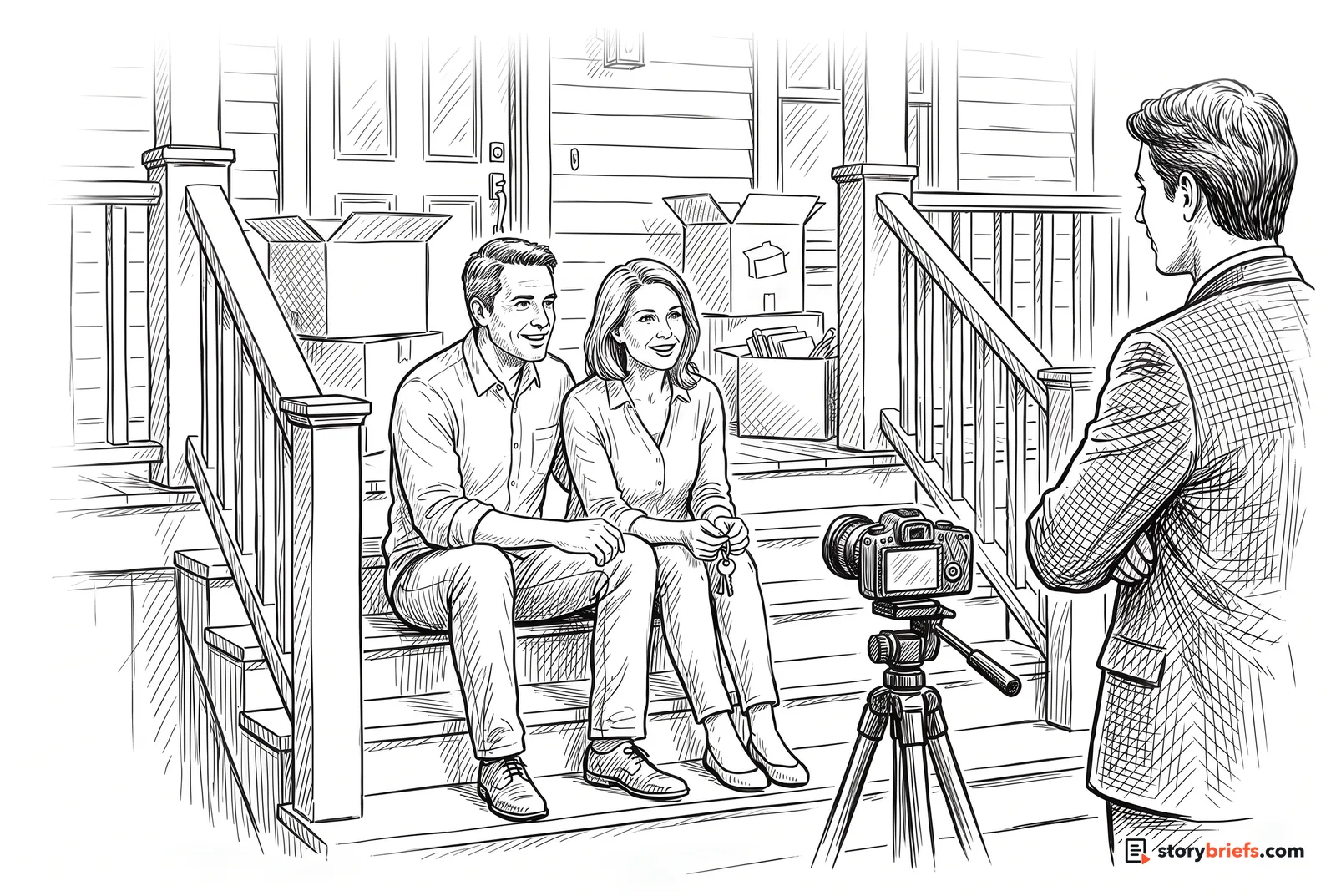
A realtor testimonial isn't proof that you sold a house; every agent sells houses. It's proof of how you behaved when it got hard. Film one buyer or seller a few weeks after closing, ask about the moment the deal nearly went wrong and what you did, and end on how they feel in their new life. Skip price and days-on-market claims, name the suburb, and keep it under 90 seconds.
- Length
- 60–90 seconds (15–30 s for social and listing presentations)
- Best for
- Winning listing appointments and first calls from buyers who don't know you yet
- Where to use it
- Agent profile and website, Listing presentation, Google Business Profile, Local social ads, Email to past clients and sphere
- Production level
- One interview at the client's home, half a day
Why real estate testimonials are different
Most testimonial videos show a customer who keeps using a product. A real estate client works with you once every few years, at one of the most stressful points in their life, and then moves on. Your next client isn’t comparing features. They’re asking one question: “Can I trust this person with the biggest financial decision I’ll make?”
That changes what the video needs to show. Every agent can say they sold a house, so a result alone proves very little (and price claims are where advertising rules get strict). What a future client can’t find anywhere else is how you behaved when things got hard: the contract that fell over, the low valuation, the night before auction. Build the interview around that moment.
It also changes timing and privacy. Film once the client has settled in, so they can talk about their new life, not the paperwork. And remember you’re publishing someone’s home: keep the street number, street signs and number plates out of shot, and get a written release that covers where and how long you’ll use it.
A note on rules: real estate advertising is regulated almost everywhere. Brokerage identification, fair housing, endorsement disclosure and consumer law can all apply to a testimonial video, so check your local licensing body’s advertising rules before you publish.
The story structure
Every StoryBrief follows the five steps of the Storification framework. Here's how each one applies to this video.
Start with the client's life before the move
Every buyer or seller is in the middle of something bigger than a transaction: a new baby, a divorce, a parent's estate, a job interstate, downsizing after the kids leave. Open on that, not the property. Viewers going through the same thing will recognise themselves before they hear a word about you. Only use what the client is comfortable sharing publicly.
“We had a second baby on the way and we were still in a two-bedroom flat.”
“Mum had lived in that house for forty years. Selling it felt like packing up her whole life.”
Show what the client needed from an agent
People choose agents on trust far more than on fees. Ask what mattered to them: straight answers, someone who'd tell them the truth about price, being kept in the loop, not being pushed. This is the belief your next client shares. Keep the conversation about the client's own experience and the property, not about who a neighbourhood suits.
“I didn't want someone who'd tell me what I wanted to hear about the price.”
“We'd been burned before. We just wanted someone who'd actually pick up the phone.”
End on the client's new life, not on the sale
The ending isn't 'sold' or 'we got the keys'; it's what the move made possible. The kids in the backyard, the first weekend without a mortgage on the old place, the parent settled near family. Then let the client say who you'd be right for. That's the invitation: 'if you're where we were, this is your person'.
“Saturday mornings now, the kids are out in the yard before I've finished my coffee.”
“If you're selling a family home and dreading it, talk to her. She gets it.”
Turn one story into a series of past clients
Real estate is a referral business, so build the testimonial into how you stay in touch. Film a mix of buyers, sellers, first-home buyers and downsizers with the same questions. Ask past clients at their closing anniversary if they'd share a short self-recorded clip, and feature them in your newsletter.
“Anniversary email: 'A year in the new place. Would you tell us how it's been, in 30 seconds?'”
Put it where sellers decide who to call
Your listing presentation and agent profile are where sellers compare agents, so the full video belongs there. Add a 20-second cut to your Google Business Profile, run a vertical version in local social ads naming the suburb, and send it to your database. Caption everything; most people watch social video with the sound off.
“Listing presentation: 'Before we talk price, here's what a recent seller in the area said about the process.'”
Script template
| Beat | Time | Visual | Audio / VO |
|---|---|---|---|
| Cold open | 0:00–0:06 | Client close-up at home, mid-thought | Their honest 'before' line about what was going on in their life |
| Who they are | 0:06–0:15 | Wider shot of the client in their new home or garden; first names and suburb on screen | One or two lines on who they are and why they were moving |
| What they were worried about | 0:15–0:30 | B-roll: the street, the front of the house without the number visible, open-home or moving-day photos the client supplies | Their fears going in: price, timing, being pushed, selling and buying at once |
| The hard moment | 0:30–0:50 | Interview; cut to the agent on the phone or at the kitchen table with the client | When it nearly went wrong (a contract fell over, a bidding war, a delay) and what the agent actually did |
| Their new life | 0:50–1:10 | Client in the new place: kids in the yard, coffee on the deck, unpacking | What the move made possible, in their words |
| Who it's for | 1:10–1:20 | Client to camera, relaxed; end card | Who they'd send to this agent; end card with agent name, brokerage name and any licence details your rules require |
Interview questions
- What was going on in your life when you decided to move?Why: Gets the Origin: the life event behind the transaction.
- How were you feeling about buying or selling before you started?Why: Names the anxiety your next client has right now.
- Had you dealt with agents before? What was that like?Why: Sets up the contrast without you having to criticise anyone.
- What mattered most to you when you were choosing an agent?Why: Draws out the Worldview, the values viewers will share.
- Was there a moment when you thought it might not work out?Why: The most believable testimonials are about pressure, not paperwork.
- What did [agent] do in that moment?Why: Gets specific behaviour, the thing that actually differentiates an agent.
- What's one thing you didn't expect about working together?Why: Often surfaces a small, human detail that generic praise never does.
- What's life like now that you're settled?Why: Gives the change as a scene for the ending.
- Who would you tell to call [agent], and why?Why: Produces a natural, identity-based Invitation to close on.
Shot list
- Interview in the client's living room or garden with soft window light; second, tighter angle if you can
- Front of the house from an angle that hides the street number and any street signs
- The client doing something ordinary in the new home: cooking, gardening, kids or pets playing
- Neighbourhood B-roll that shows the suburb: the local café, park or main street
- The agent with the client: walking through, talking at the kitchen table (recreate honestly, don't stage a fake moment)
- Photos the client supplies: moving day, the first night, the 'sold' moment
- Keys or a door opening, for the social cutdown
What it costs
Ranges are USD for one finished video plus social cutdowns. The price moves with crew size, travel between clients and whether you add drone or neighbourhood footage. The best value is booking a videographer for a day and filming three or four past clients in the same area. Many agents already pay for listing video, so ask that videographer for a testimonial day rate.
Common mistakes
- Leading with results ('sold $80k over asking in six days'). It sounds like an ad, it may not be typical, and price claims are where advertising rules bite. Let the client talk about the experience.
- Filming at closing or on moving day. Clients are exhausted and the life change hasn't happened yet. Two to six weeks later gives you the 'after'.
- Showing the house number, street sign or a recognisable car number plate. You're publishing where your client lives.
- Leaving off the brokerage name or licence details your state or country requires in advertising.
- Interviewing yourself. The agent belongs in the B-roll; the client is the storyteller.
- Shooting only buyers. Most agents earn their living from listings, so make sure sellers are well represented.
Useful tools
- Vocal Video: collect short, self-recorded testimonials from past clients with guided questions, ideal for anniversary requests
- Riverside: interview sellers who have moved interstate or overseas, recorded in high quality from their browser
- Descript: edit the interview by editing the transcript, cut social versions and add captions
- Artlist: licensed music for the finished cut and social versions
FAQ
Are there rules about real estate testimonial videos?
Yes, and they vary by place. In the US, your state real estate commission sets advertising rules (most require the brokerage name in every ad), the NAR Code of Ethics requires a true picture in advertising for members, the Fair Housing Act prohibits ads that indicate a preference based on a protected class, and the FTC's Endorsement Guides require you to disclose any incentive a client received for the testimonial. In Australia, state fair trading and real estate licensing rules apply alongside the Australian Consumer Law; in the UK, the ASA and CMA rules on misleading claims and reviews apply. Check with your licensing body or brokerage compliance team before publishing.
When should I ask a client for a video testimonial?
Ask at closing or settlement, when they're grateful, but film two to six weeks later, when they're settled. Send the questions in advance and keep the shoot under an hour.
Should I film buyers or sellers?
Both, but if you can only film one, film a seller. Seller testimonials help you win listings, which is where most agents' income comes from. Buyer stories work best for first-home buyers and people moving into your area.
Can I offer clients a gift for a testimonial?
You can thank them, but in the US the FTC expects you to disclose any payment, gift or discount connected to the testimonial, and other countries have similar rules. A closing gift given to every client regardless is different from a reward for the video, but if in doubt, disclose it.
How long should a realtor testimonial video be?
60–90 seconds for your website and listing presentation, with 15–30 second cutdowns for social and your Google Business Profile.
Related briefs
- Testimonial video: the complete briefThe general guide this page builds on
- Patient testimonial video for dental clinics: brief, questions and scriptPlan a dental patient testimonial video that calms nervous patients: story structure, interview questions, script, consent tips and costs.
- SaaS customer testimonial video: brief, questions and scriptPlan a SaaS customer testimonial video that B2B buyers believe: who to interview, story structure, questions, script, approvals and real costs.