

Brand story video: how to plan one people remember
Updated 27 October 2026
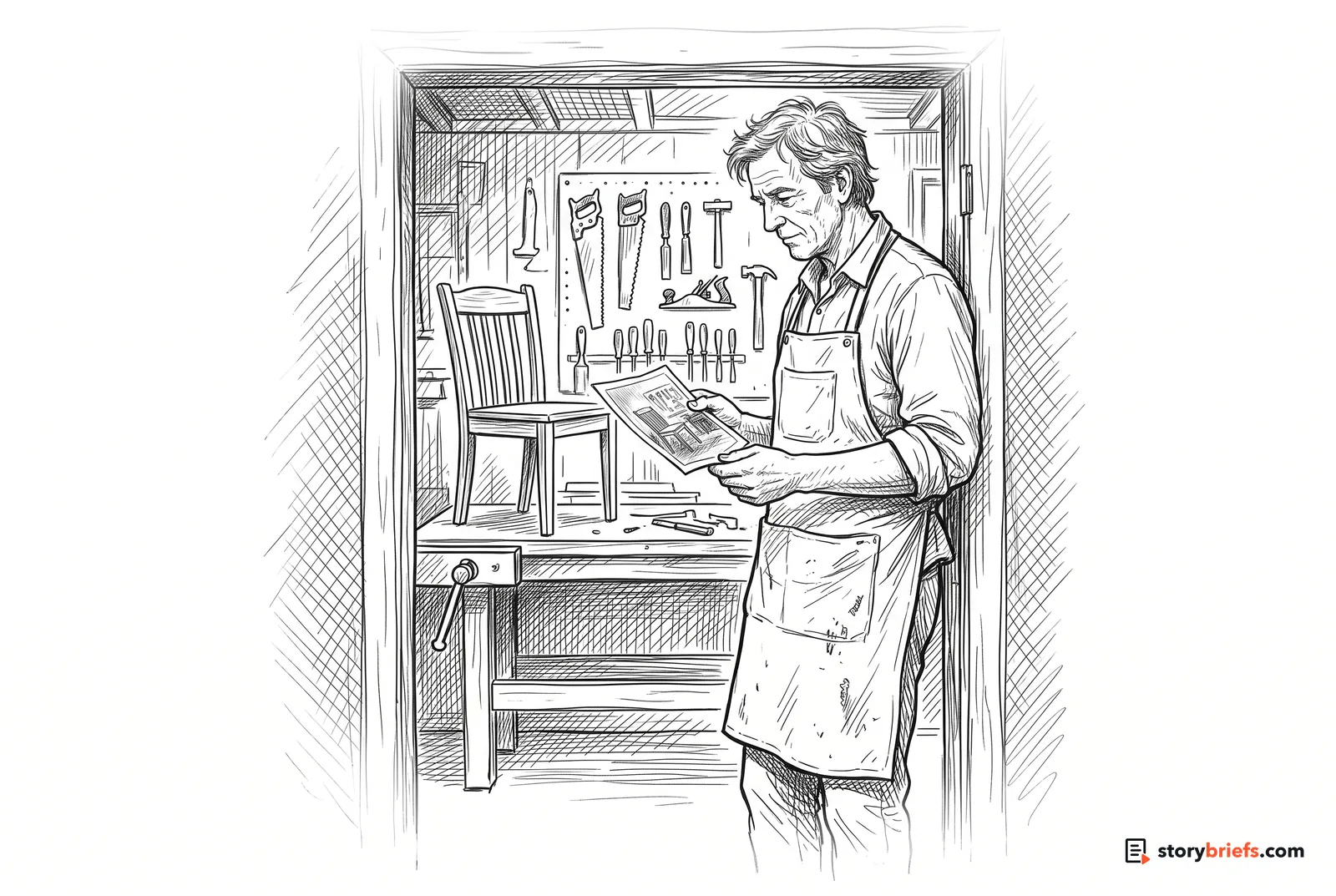
A brand story video explains why your organisation exists, not what it sells. Start with a real origin moment, show the belief behind it, and end by inviting viewers to join people who share that belief. It usually runs 90 seconds to 3 minutes, and it lives on your About page, your homepage and at the start of every sales conversation.
- Length
- 90 seconds–3 minutes (30–60 s versions for social)
- Best for
- Explaining why you exist and attracting people who share your values
- Where to use it
- Homepage, About page, Pitch decks, Recruitment, Social
- Production level
- Founder interview + B-roll, 1–2 shoot days
Why most brand videos are forgettable
Most brand videos are a montage of smiling staff, drone shots and the words “passion”, “quality” and “innovation”. They’re easy to make and impossible to remember, because they don’t tell a story. They just describe a company.
A brand story video works the other way round. It starts with a real moment, shows a belief, and invites the viewer to join people who share it. People remember stories and pass them on; they forget adjectives.
This brief uses the five steps of Storification to plan one: Origin, Worldview, Invitation, Participation and Amplification.
The story structure
Every StoryBrief follows the five steps of the Storification framework. Here's how each one applies to this video.
Find the real moment it started
Every organisation has a founding moment, usually a frustration, a loss or a promise. Don't summarise it ('we were founded in 2015 to…'). Tell it as a scene: where were you, what happened, what did you decide? Then connect that moment to what your audience is going through today.
“I was sitting in my car outside the hospital, and I realised nobody had explained anything to us.”
“My dad ran this workshop for thirty years. When he retired, every customer asked the same question.”
State the belief, not the demographic
Brands that travel are built around a belief, something you think is true that others don't yet. Say it plainly. The right viewers will lean in; the wrong ones will drift off, which is the point.
“We believe small businesses deserve the same tools as big ones.”
“Good design shouldn't need a manual.”
Call to identity, not to action
Instead of 'buy now' or 'contact us', invite viewers to identify with the people you serve. Describe who they are and what they stand for, so joining you feels like being themselves.
“If you've ever been told 'that's just how it's done' and thought 'why?', you're one of us.”
“This is for people who'd rather fix it properly than fix it fast.”
Give the audience a role in the story
A brand story told as a monologue ends when the video ends. Show customers, staff or community members as part of it, and give viewers something to add: their own origin story, a vote, a challenge or a contribution.
“On screen: 'Tell us the moment you decided to do it differently.'”
Plan how the story travels
Cut the story into pieces that work alone: the origin moment as a 45-second clip, the belief as a quote card, the invitation as a short ad. Use the same lines on your website, in pitches and in recruitment, so every channel tells the same story.
“Origin clip: one scene, one decision, 45 seconds, captioned.”
Script template
| Beat | Time | Visual | Audio / VO |
|---|---|---|---|
| Origin scene | 0:00–0:25 | Founder in a meaningful location; archive photos or recreated details | The founding moment, told as a story with a time and place |
| The problem in the world | 0:25–0:45 | B-roll of the problem as your audience experiences it today | Connect the founder's moment to the audience's reality now |
| The belief | 0:45–1:05 | Founder to camera or interview; team at work | The worldview, stated plainly in one or two sentences |
| What we do about it | 1:05–1:35 | Product, service or team in action, with real customers if possible | How the belief shows up in the work, with one concrete example |
| The people in it | 1:35–2:00 | Customers, staff, community; quick moments, not long speeches | Short lines from others who share the belief |
| Invitation | 2:00–2:20 | Founder or team, warm closing shot; end card | Who this is for, as a call to identity; URL on the end card |
Interview questions
- Take me back to the moment you decided to start this. Where were you?Why: Gets the Origin as a scene rather than a summary.
- What was frustrating you about the way things were done?Why: Finds the tension that makes the story worth telling.
- What did people tell you when you said you were going to do it?Why: Doubters add stakes and make the founder relatable.
- What do you believe that most people in your industry don't?Why: Draws out the Worldview in a quotable line.
- Who are you really doing this for? Describe one of them.Why: Gives a human picture of the audience for the Invitation.
- Tell me about a customer or moment that made you think 'this is why we do it'.Why: Provides a concrete proof story for the middle of the video.
- What would be lost if you stopped tomorrow?Why: Often produces the most honest, emotional line.
- If someone watching shares what you believe, what would you say to them?Why: Gives a natural closing Invitation in the founder's voice.
Shot list
- Founder interview: main angle plus a second, tighter angle
- The founding location, or a place that represents it
- Archive photos, documents or objects from the early days
- The team doing real work, not posing
- Customers or community members using what you make
- Details that show your values (the care in a process, a handwritten note, a ritual)
- Founder walking into or through the space
- Closing shot with the whole team or community
What it costs
Ranges are USD for one finished brand story video plus social cutdowns. Brand films vary more in price than any other business video, because they can range from one interview to a multi-location shoot with archive, animation and an original score. The biggest cost saver is a clear brief: production companies quote higher when the story isn't decided yet.
Common mistakes
- Starting with 'Founded in…'. Dates aren't stories; moments are.
- Listing values ('innovation, integrity, excellence'). Show one value in action instead.
- Making it about the product. The product is the proof of the belief, not the story.
- Having everyone in the company say a line. Pick the one or two people who tell it best.
- Ending with 'Contact us today'. End with who the video is for.
- Shooting it once and never using it again. A brand story should appear in your pitch decks, onboarding and recruitment too.
Useful tools
- Descript: edit a long founder interview by editing the transcript
- Artlist: licensed music to carry the emotional arc
FAQ
What's the difference between a brand story video and an explainer video?
An explainer shows what you do and how it works. A brand story video shows why you exist and what you believe. Most businesses need both; the brand story makes people care, the explainer helps them understand.
How long should a brand story video be?
90 seconds to 3 minutes for the main version. If you can't hold attention for 90 seconds, the story needs work, not trimming. Cut 30–60 second versions for social.
Should the founder be in the video?
Usually, yes, because the origin story is theirs to tell. If the founder isn't comfortable on camera, record them as audio over B-roll, or let a long-serving team member or customer tell the story.
Do I need a script?
Write a story outline and interview questions, not a word-for-word script. Founders reading lines rarely sound natural. Interview them, then shape the edit around the best answers.
How do I know if my brand story is working?
Watch what people repeat. If customers, staff or prospects start telling your origin story or using your belief line back to you, it's travelling.